








Understanding CW and CCW PCD tooling, bottom-view rotation, planetary grinder movement, and why machine direction matters on walk-behind grinders.
Quick answer: Many PCD tools for walkbehind grinders are directional and are sold as clockwise (CW) or counter-clockwise (CCW) tooling. The safest way to select the correct PCD direction is to confirm the machine’s working rotation direction. On counter-rotating planetary grinders, the required PCD tooling type follows the large main plate direction when flipped over, not the direction of the smaller heads
PCDs are a great grinding tool for removing tacky, hard-to-remove glue, mastics, adhesives, and other coatings. However, PCD tooling can be confusing to select for a walk-behind grinder because many PCD tools are directional. Unlike many sintered diamond tools, PCDs are often sold as either clockwise (CW) or counter-clockwise (CCW) tooling.
The most confusing part is this: CW or CCW refers to the direction that the machine spins during operation — not the direction the tool appears to spin when you are looking at the bottom of the machine.
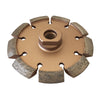
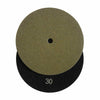
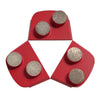
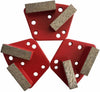
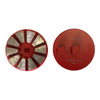
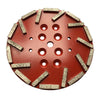
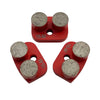
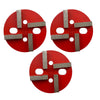
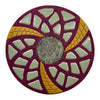
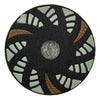
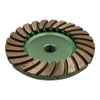
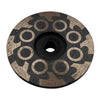
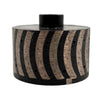
For example, if you look at this PCD disc and follow the arrows, you may think it is a clockwise tool, but that tool is actually sold as counter-clockwise.

Directional PCD tooling is selected by the CW or CCW tooling type required for the machine’s working rotation, not only by the direction that appears visible from the installer’s bottom-view position.
With that in mind, here is how to select PCD tools for different types of walk-behind grinders.
Key point: Confirm the machine’s rotation direction whenever possible. If the machine manual gives a specific direction for directional tooling, follow the machine manufacturer’s instruction first.
Single-Head Machine
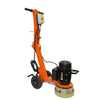
For a single-head machine, remember that the spinning direction during operation is opposite of what you see when the machine is flipped over.
If you are looking at the bottom of the machine and the plate rotates counter-clockwise, select clockwise PCD tooling. Vice versa.
If you do not have access to the machine and have to make a general choice, clockwise tooling is often the safer default. Still, always confirm the machine direction when possible.

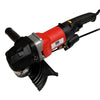
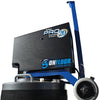
Single-head walk-behind grinder example. When the machine is tilted up, the visible bottom-view rotation is opposite of the machine’s working rotation during operation.
Double-Head Machine
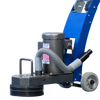
This case is simpler. The two heads on a double-head machine typically spin in opposite directions. Because of that, you should usually use one clockwise PCD and one counter-clockwise PCD.
In other words, order a matching set that includes both directions so each head has the correct directional tooling.

Double-head grinders typically use two heads spinning in opposite directions, so directional PCD tooling usually needs to include one CW set and one CCW set.
Planetary Machines
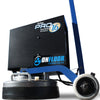
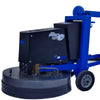
Modern planetary machines usually have several smaller grinding heads mounted on a larger main plate. These smaller heads carry the actual PCD tools. The large main plate also rotates, which is why the motion can be confusing.

On many planetary grinders, PCD tools are mounted on the smaller heads, but the required CW or CCW tooling type should on the large main plate’s workin direction when viewed from below.
For counter-rotating planetary grinders, the PCD direction matches the rotation direction of the large main plate when flipped over, not the visible rotation direction of the smaller grinding heads.
In another word, when you are looking at the bottom of a counter-rotating planetary machine:
- The required PCD tooling type is the opposite the visible direction the smaller heads spin.
- The required PCD tooling type is the same as the direction the large main plate spins.
A note on “counter-rotation”: Many machine manufacturers describe planetary grinders as counter-rotating. This does not mean you need counter-clockwise PCD tooling. It just means the smaller individual plates spin in opposite direction of the larger main plate.
Machines with More Heads: 4 / 6 / 8 / 10+ Heads
Some larger machines have even more grinding heads. In many cases, these machines have an even number of heads, with each pair spinning in opposite directions. For this type of setup, you will usually need an equal amount of clockwise and counter-clockwise PCDs.
For example, larger multi-head walk-behind grinders may use paired heads that rotate in opposite directions. In that case, ordering only one PCD direction may leave part of the machine set up incorrectly.

Larger multi-head walk-behind grinders often use paired heads rotating in opposite directions. In many cases, contractors should order equal quantities of CW and CCW PCD tooling after confirming the machine’s rotation pattern.
For the Lucky Few: Reversible Machines
Before stressing too much about PCD directions, check your machine first. Some electric grinders have a setting that can switch rotation direction.
If your grinder can reverse direction, you may have more flexibility. If the tooling is not cutting correctly, you may be able to switch to the opposite direction and get the PCD tools working.
Final Takeaway
The safest way to select PCD tooling is to confirm your machine’s working rotation direction and choose the correct CW or CCW tooling type based on that direction.
On many counter-rotating planetary grinders, that usually means selecting PCD tooling based on the large main plate direction, not the visible direction of the smaller heads when the machine is flipped over.
Term Explanations
| Term | Simple Explanation |
|---|---|
| PCD | Polycrystalline diamond. In floor grinding, PCD tools are commonly used for removing glue, mastics, adhesives, coatings, and other sticky materials. |
| CW / Clockwise | A tooling direction or rotation direction that moves like the hands of a clock. |
| CCW / Counter-Clockwise | A tooling direction or rotation direction that moves opposite the hands of a clock. |
| Planetary grinder | A grinder with smaller grinding heads mounted on a larger main plate. The smaller heads rotate while the larger plate also moves. |
| Counter-rotation | A machine motion where the smaller heads rotate opposite the larger main plate. It does not automatically mean counter-clockwise PCD tooling. |
FAQ
Do PCD tools have a direction?
Yes. Many PCD tools for walk-behind grinders are directional and are sold as either clockwise (CW) or counter-clockwise (CCW) tooling.
Why does the PCD arrow look like one direction, but the tool is sold as the opposite direction?
The arrow you see from the installer’s viewpoint may not represent the machine’s working rotation during operation. PCD tooling direction is usually based on the required CW or CCW tooling type for the grinder, not only the direction that appears visible when the machine is flipped over.
For a single-head grinder, which PCD direction should I choose?
If you are looking at the bottom of the machine and the plate rotates counter-clockwise, select clockwise PCD tooling. The spinning direction during operation is opposite of what you see when the machine is flipped over.
For a double-head grinder, do I need both CW and CCW PCDs?
Usually, yes. Double-head machines typically have two heads spinning in opposite directions, so you should use one clockwise PCD and one counter-clockwise PCD.
For a planetary grinder, should I follow the small heads or the large main plate?
For many counter-rotating planetary grinders, the required PCD tooling type usually matches the large main plate direction, not the visible direction of the smaller grinding heads. Always confirm the machine’s rotation direction when possible.
Related Products & Support


Need Help Choosing the Right PCD Direction?
If you are still unsure whether your grinder needs clockwise, counter-clockwise, or a matched set of both directions, contact EDiamondTools before your next job. We can help you check the machine type, working rotation direction, and compatible tooling style.