
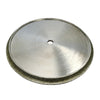
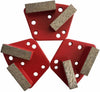
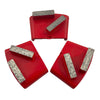
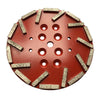
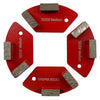
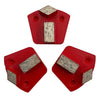
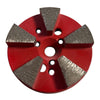

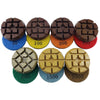
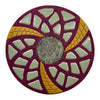
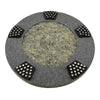
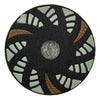
















Understanding direction arrows, sintered diamond segments, factory dressing, and when rotation direction really matters.
Quick answer: For most sintered diamond tools, the direction arrow is often more of a guideline than a strict requirement. However, PCD tools and some specially designed blade bodies can be directional.

We often see direction arrows on diamond blades, and it is common for customers to wonder whether they installed the tool correctly — or even whether they received the right product.
That is a completely valid concern. Especially if you come from woodworking or have experience using carbide blades, rotation direction is critical. However, when it comes to sintered diamond tools, the direction often matters much less than many people expect.
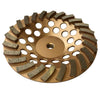
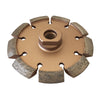
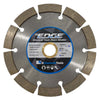
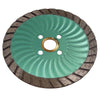
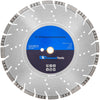
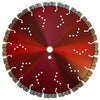
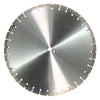
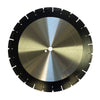
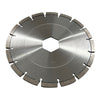
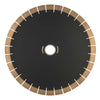
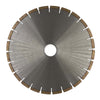
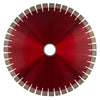
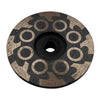
Take a closer look at the segments on this blade. You may notice a “shooting-star” or comet-tail effect behind each exposed diamond grit, with the tails pointing away from the direction of the arrow.

During use, the diamond grits lead the cut or grind, while the bond material wears away behind them. This should be desired to maximize the tool's performance, so why do we say the direction may not matter as much?
Let’s take a step back and look at how this pattern — and sometimes even the direction arrow — is created in the first place.
How the “Shooting-Star” Pattern Is Created
Sintered diamond tools are made with diamond particles mixed into a metal bond. As the bond wears during use, new diamonds are exposed.
When a sintered diamond segment first comes out of the sintering furnace, it usually looks like a solid block, with very little diamond visibly exposed on the surface.
Factory dressing is the process of grinding or dressing the segment surface to expose diamonds before the tool is used. This helps the tool start cutting or grinding more effectively right away. In some cases, it also improves the product’s visual appearance for marketing purposes.
The direction of the factory dressing is based on the directional arrow of the tool, and it creates the “shooting-star” effect. This can make a tool look directional at first glance.

Is the “Shooting-Star” Effect Critical to Performance?
Not in the long run.
If a sintered diamond tool spins in the opposite direction from the way the factory initially dressed the surface, the tool can quickly create a new wear pattern in the opposite direction after a short period of use.
As the bond wears and new diamonds become exposed, the tool essentially “self-corrects.” That means the visible comet-tail pattern will reverse, and the tool can still continue cutting or grinding effectively.
For most sintered diamond tools, installing the tool opposite the arrow direction is usually not a major performance issue.
What About Electroplated, Vacuum Brazed, or Resin Bond Diamond Tools?
In most cases, electroplated, vacuum brazed, and resin bond diamond tools do not have a strict directional requirement.
These tools are made differently from sintered metal-bond tools, but they generally do not rely on a directional segment wear pattern in the same way a traditional cutting blade might.
Important Exceptions
1. PCD Tools
PCD tools are directional.
PCD stands for polycrystalline diamond. Unlike standard sintered diamond segments, PCD pieces are mounted on a carbide substrate.
If a PCD tool is run in the wrong direction, the carbide backing may contact the surface instead of the diamond cutting edge. In that case, the tool will not self-correct the way a sintered diamond segment can. For PCD tools, always follow the manufacturer’s rotation direction.
2. Special Blade Body Designs
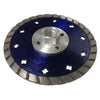
Some diamond blades have a directional blade body design. For example, the steel core may be engineered for shock absorption, cooling, noise reduction, or other performance benefits.
In these cases, the diamond segments themselves may still be mostly non-directional, but the blade body is designed to run in a specific direction. To get the full benefit of the manufacturer’s design, it is always best to follow the arrow when one is provided.
FAQ
Do diamond blades have a rotation direction?
Many diamond blades include a direction arrow. For most sintered diamond blades, the arrow is often a guideline rather than a strict requirement. However, some blades and tools are directional, so it is best to follow the arrow when one is provided.
What is the “shooting-star” pattern on a diamond segment?
The “shooting-star” pattern is a visible trail on the segment surface. It is often created during factory dressing, when the top surface is ground to expose diamonds for immediate use.
Does the shooting-star pattern mean the tool must spin in one direction?
Not always. On many sintered diamond tools, the shooting-star pattern shows the initial dressing direction, not a permanent cutting structure. As the bond wears, the working surface can form a new pattern based on the actual rotation direction.
Are PCD tools directional?
Yes. PCD tools are directional because the diamond pieces are mounted on a carbide substrate. If the tool runs in the wrong direction, the carbide backing may contact the surface instead of the diamond cutting edge.
Related Products & Support


Need Help Choosing the Right Diamond Tool?
If you are unsure about rotation direction, blade type, bond, or application, contact EDiamondTools for support before your next job.